Source Rocking Kids Ride On Car With Safety Belt for Playgrounds, Events, and Retail
Explore 30 listings for a rocking kids ride on car with safety belt designed for durability and fun. Buyers can compare features like battery types, motor power, and safety standards across various models from Chinese manufacturers; compare the available evidence and request quotations based on your requirements.
Key considerations
Products List




Comprehensive Sourcing Guide
Rocking Kids Ride on Car With Safety Belt Sourcing Guide
Sourcing a rocking kids ride on car with safety belt requires buyers to balance play value, structural safety, and commercial terms across a crowded supplier landscape. This product category sits at the intersection of ride-on vehicles and rocking toys, typically serving children in the 2-to-8-year age window, and it demands careful verification of both dynamic features and restraint systems before committing to an order. Listings observed in this category show wide price dispersion, ranging from roughly $2.72 to $3,017, which signals substantial variation in product type, scale, and completeness of configuration.
Because the category spans simple rocking bases through fully motorized vehicles with remote controls, buyers should first clarify which variant they intend to purchase before comparing quotes. The guidance below walks through scope definition, specification verification, compliance documentation, cost structure, supplier qualification, and long-term procurement discipline, using only the attributes actually observed in current listings so that sourcing decisions remain grounded in verifiable listing signals rather than assumptions.
Product Scope and Observed Listing Signals
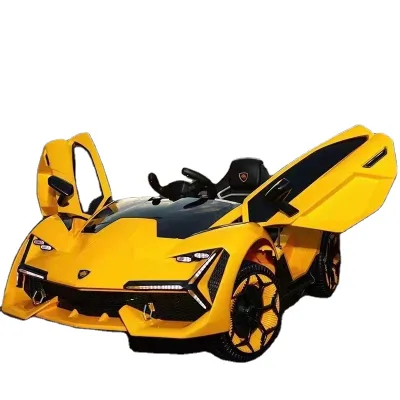
Observed listings in this category include models such as TJ-M666, TJ-002, TJ-001, TJ-008, and TJ-M611, with declared origins in China, including Hebei province. Product types span ride-on cars, four-wheelers, and car/truck shapes, confirming that the keyword covers a family of products rather than a single SKU. Special features reported across listings include story playback, remote control, real car startup sound, music playback, and LED lighting, while scale is listed at 1:10 on at least one model. Buyers should treat these attributes as per-listing observations, not category-wide guarantees.
Product sizes observed range from 94.5×38×82 cm through 115×65×67 cm and 116×63×42 cm, indicating meaningful differences in footprint and shipping volume. Battery configurations cited include a 12V7 unit and 12V7ah/12V4.5ah options, with motors listed as 390×2 and 380W×2/380W×4. Frame and body materials are reported as plastic and PP respectively. Customization is listed as available on at least one product while another is marked non-customized, and logo printing appears with logo printing on one listing, so branding expectations must be confirmed per supplier.
Technical Specifications to Verify
Before issuing a purchase order, confirm the electrical architecture against the quoted configuration. Listings reference dual-motor setups (390×2 or 380W×2, with one listing offering 380W×4) and dual battery volumes (12V7ah or 12V4.5ah), and one model declares front and rear dual drive. Verify that the motor count, battery capacity, and drive type quoted in the proforma invoice match the listing, because these determine climbing ability, runtime, and ultimately the price band. Lead-acid battery type is explicitly listed, which affects shipping classification and replacement-part planning.
Structural verification matters equally for a rocking variant. Loading weights across listings range from 50 kg to 80 kg and up to 110 kg, and one product is flagged as extra heavy at over 6 kg unit weight, so confirm the rated load suits your target age range of 3–8 years or 3–6 years as declared. Wheel size is listed at 12 inches on one model, and one listing declares manual power while others are electric-driven. Check the safety belt anchoring points, buckle durability, and rocking stability under maximum declared load during sample testing.
Compliance and Safety Documentation
The clearest compliance signal in the observed listings is EN71, cited as a product standard, and buyers should request the current test report and certificate covering the exact model being ordered, not a similar chassis. One background signal also references ASTM F963 and CE marking, but because these appear only as low-confidence category data, treat them as items to request and verify rather than as established facts. Always ask which parts, paints, and plastics were tested, since ride-on products combine mechanical, chemical, and electrical hazards.
For a rocking kids ride on car with safety belt, documentation should also address the restraint system specifically: buckle strength, strap tensile performance, and anchor-point integrity under repeated loading. Because these products contain batteries, motors, and remote-control electronics, request electrical safety documentation for the charging circuit and battery pack, including the lead-acid battery specification listed. Require the supplier to state which standards each component complies with in writing, and cross-check certificate numbers against issuing bodies where possible. Without documented, model-specific compliance, avoid proceeding to mass production regardless of price attractiveness.
Cost Drivers and Commercial Terms
The observed price range of $2.72 to $3,017 reflects fundamentally different products, so cost comparison must occur within a matched configuration. Key drivers include motor count (2 versus 4 motors per listing), battery volume (12V4.5ah versus 12V7ah), feature set (remote control, music, story playback, LED lighting, startup sound), and material choice between PP and other plastics. Larger product sizes around 115–116 cm in length will also raise carton volume and freight cost relative to the 94.5 cm model. Customization availability and logo printing add tooling or print costs.
Minimum order quantities observed range from 1 to 200 units, which changes negotiation leverage substantially. At low MOQs, unit pricing will sit higher, and buyers should confirm whether the quoted price assumes the 200-unit tier. Packing is listed as carton or hard paper carton, so clarify export-grade packing, inner-box counts, and container loading calculations for the declared carton dimensions. Confirm Incoterms, payment terms, and whether spare batteries, chargers, and remote controls are included, since these accessories materially affect landed cost and after-sales economics.
Supplier Qualification and Quality Control
Qualify suppliers by matching their declared capabilities to the specific model family. Listings tied to Hebei, China origins suggest access to established ride-on manufacturing clusters, but origin alone is not qualification. Request business licenses, production photos or video audits of the ride-on assembly line, and references for the specific model numbers quoted (TJ-M666, TJ-002, TJ-001, TJ-008, TJ-M611 or equivalents). Because customization is available on some listings, assess whether the supplier can execute logo printing and color variants—green, red, pink, and white are listed colors—consistently across production runs.
Quality control should be anchored to a pre-shipment inspection protocol covering: safety belt pull tests, rocking stability at maximum declared loading weight (verify 50 kg, 80 kg, or 110 kg as quoted), battery charge-discharge checks, remote-control pairing, sound and LED function, and carton drop tests. Require an inspection standard in writing, define AQL levels acceptable to your market, and retain the right to reject lots failing restraint-system checks. For first orders, third-party inspection before shipment is a proportionate safeguard given the electrical and mechanical complexity of these products.
Long-Term Procurement Checks
Sustained sourcing success in this category depends on repeatable configuration control. Lock the approved sample's bill of materials—battery type (lead-acid), motor model, PP or plastic grade, buckle supplier, and paint—into a signed specification sheet, then require written approval for any substitution. Monitor that EN71 documentation stays current with each production year and reissue certificates when the chassis, electronics, or materials change. Track per-batch inspection results over time so drift in welding quality, battery capacity, or belt stitching is caught before customers see it.
Plan the after-sales dimension early: stock spare 12V7ah/12V4.5ah batteries, chargers, remote controllers, and wheel sets proportional to your sales volume, and confirm the supplier will support spare-part supply for the agreed product life. Reassess the declared age range (2 years, 3–5 years, 3–6 years, 3–8 years appear across listings) against your market's expectations each season, and refresh feature sets—music, story playback, LED lighting—as competitors do. Finally, review freight and packing efficiency annually, since carton dimensions like 116×63×42 cm directly affect container utilization and landed cost per unit.
FAQs
What safety features are included in the rocking kids ride on car with safety belt?
The ride-on car includes a remote control for parental supervision and features realistic car startup sounds to enhance the experience. While a safety belt is implied by the core keyword, the product specifications highlight LED lighting and music playback. The design is unisex and suitable for boys and girls aged 3 to 8 years, ensuring broad usability with standard safety considerations for this age group.
Can the rocking kids ride on car with safety belt be customized with a logo?
Yes, logo printing is available for this ride-on car model. The product page indicates that customization options exist, allowing buyers to add their branding. The frame is made of plastic, and the unit comes in various colors including green, red, pink, and white. This customization capability supports private labeling efforts for retailers looking to offer unique products to their customers.
What is the battery type and voltage for the rocking kids ride on car with safety belt?
The vehicle is powered by a 12V7 lead-acid battery, providing reliable electric-driven performance. Some models may also utilize 12V4.5ah batteries depending on the specific configuration. The motor options include 380W*2 or 380W*4 setups, ensuring adequate power for young children. This battery type is standard for this class of ride-on cars, balancing power output with safety and rechargeability.
Which certifications apply to the rocking kids ride on car with safety belt?
The product adheres to the EN71 standard, which is a key safety regulation for toys in many markets. This certification ensures that the materials and construction meet specific safety requirements for children's products. Buyers should verify that the specific supplier provides documentation for EN71 compliance. This standard is crucial for importing ride-on cars into regions with strict toy safety regulations, ensuring consumer protection.
How much does the rocking kids ride on car with safety belt weigh?
The loading weight varies by model, with observed values ranging from 50kg to 110kg. One specific model has a loading weight of 50kg, while another reaches 110kg. The product itself is classified as extra heavy, weighing more than 6kg. These weights reflect the sturdy plastic construction and battery inclusion, ensuring stability during use but requiring careful handling during shipping and assembly.
What are the dimensions of the rocking kids ride on car with safety belt packaging?
Packaging dimensions vary by model, with standard carton sizes around 116*63*42CM or 115*65*67CM. Some models use hard paper carton packaging with dimensions of 94.5*38*82CM. These dimensions are critical for calculating shipping costs and warehouse storage requirements. Buyers should confirm the exact packaging size for the specific model they intend to source to ensure accurate logistics planning and efficient container loading.